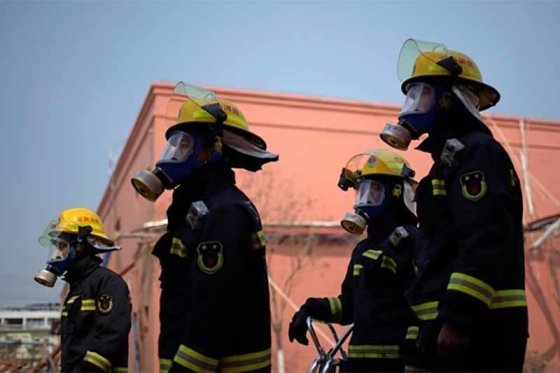
China revised three fire-accident investigation rules
Read article →
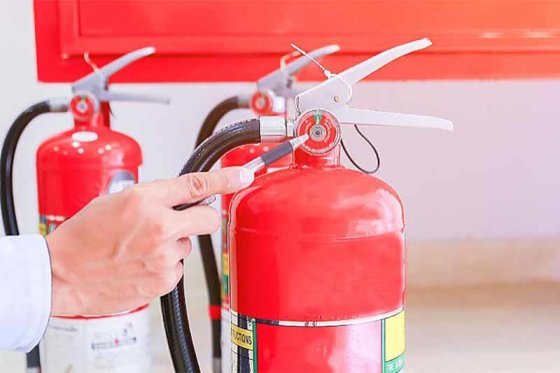
An extinguisher is a first-aid tool, not a fire-fighting system. Used correctly on a small, contained fire, it saves a room. Used on the wrong fire, it can make matters much worse.
| Class | What is burning | Suitable extinguisher |
|---|---|---|
| A | Wood, paper, textiles, rubbish | Water, foam, ABC dry powder |
| B | Petrol, solvents, paints, flammable liquids | Foam, ABC dry powder, CO2 |
| C (or E) | Live electrical equipment | CO2, dry powder — never water or foam |
| D | Magnesium, sodium, metal powders | Special dry powder, applied by trained staff |
| F / K | Cooking oils and fats | Wet chemical (or a lid / fire blanket) |
Water extinguishers carry only an A rating. Foam adds B. Dry powder marked ABC covers A, B and C, which is why it is the common choice for vehicles and general workplaces — but it leaves a corrosive, hard-to-clean residue, so it is a poor choice next to delicate electronics. CO2 leaves no residue and is excellent on electrical fires, though the horn gets very cold and it is easy to underestimate how short its discharge is.
| Interval | Check |
|---|---|
| Monthly | Pressure gauge in the green band; pin and tamper seal intact; no corrosion, dents or leaks; hose and nozzle clear and not cracked; unit is in its designated place and unobstructed |
| Annually | Professional service: weight or pressure verification, internal inspection where required, replacement of damaged parts |
| Every 5–6 years | Extended service, including discharge and recharge for many types |
| Every 10–12 years | Hydrostatic test of the cylinder, or replacement |
Any extinguisher that has been partly used, dropped, corroded or exposed to fire must be recharged or replaced immediately — even if the gauge still reads full.
A 1–2 kg portable unit contains only a few seconds of agent and has a range of a few metres. It will not suppress a fire that has spread beyond the object that first caught light, and it is not a substitute for an alarm, a sprinkler system or an escape plan. Treat it as the tool that buys you the time to get out safely.
Class A (wood, paper, textiles): water, foam or ABC dry powder. Class B (petrol, solvents, flammable liquids): foam, ABC dry powder or CO2. Class C (live electrical equipment): CO2 or dry powder — never water or foam. Class D (combustible metals): special dry powder applied by trained staff. Class F/K (cooking oils and fats): wet chemical, or a lid / fire blanket.
PASS stands for Pull, Aim, Squeeze, Sweep: pull the pin, aim low at the base of the flames, squeeze the handle to release the agent, and sweep the jet side to side across the base of the fire until the flames are out.
Stand about 2–3 metres from the fire — close enough for the jet to reach, far enough to stay out of the heat. Keep your back to the exit and never let the fire get between you and your escape route. Outdoors, stand upwind.
A portable unit discharges in roughly 8–15 seconds. If the fire is not out by then, leave immediately — a 1–2 kg unit will not suppress a fire that has spread beyond the object that first caught light.
Monthly: pressure gauge in the green band, pin and tamper seal intact, no corrosion or damage, unit unobstructed. Annually: professional service. Every 5–6 years: extended service including discharge and recharge. Every 10–12 years: hydrostatic test or replacement. Any partly used, dropped or corroded unit must be recharged or replaced immediately.
Send us your project requirements — our engineers will respond within one business day.