Protector Safety PROTECTOR SAFETY IND CO., LTD.
Equipment

What are the common fire-fighting equipment

Fixed suppression systems, portable extinguishers, detection, water supply and PPE — a practical map of the fire-fighting equipment used in modern buildings.

← Back to all news
Equipment Published 2026-06-18 Reading time 6 min
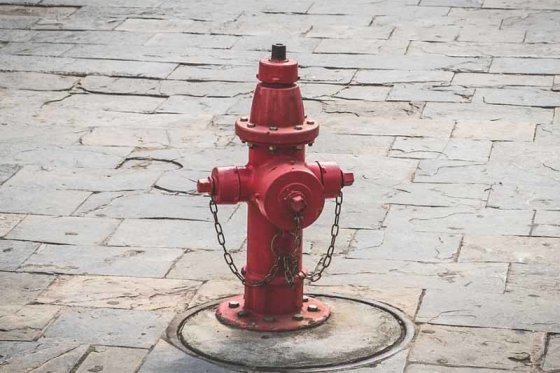
A red outdoor fire hydrant on a paved surface, one of the common water supply points

Fire-fighting equipment is usually grouped by how it is deployed: a fixed system that protects a whole building, a portable appliance that a trained person carries to a small fire, and the water supply and detection that make both of them work. Knowing which group a product belongs to makes it much easier to specify a compliant package.

Key takeaways

  • Fixed systems (sprinklers, foam, gas, water mist) act automatically, without a person present.
  • Portable equipment (extinguishers, hose reels, blankets) depends on someone being able to reach the fire.
  • Detection, alarm and water supply are the layers that make everything else effective.
  • Every extinguisher has a class rating — A, B, C, D or F/K — that must match the hazard.

1. Fixed fire suppression systems

A fixed system is permanently installed and piped to a water or agent supply. It reacts to heat or smoke by itself, which is why it is the backbone of protection in unoccupied or high-risk spaces.

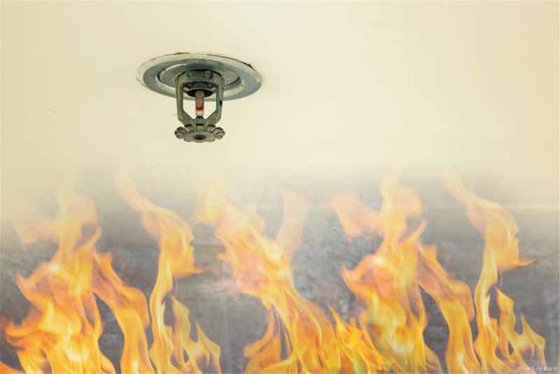
  • Automatic sprinkler systems — the most widely used fixed system; see our separate guide on how an automatic sprinkler system works.
  • Foam systems — for flammable liquid fires (Class B), typical in fuel depots, aircraft hangars and chemical plants. Foam blankets the surface and separates the fuel from oxygen.
  • Gas and clean-agent systems — CO2, FM-200, Novec 1230 and similar agents for server rooms, archives and switchgear, where water would destroy the contents.
  • Water mist and deluge systems — fine droplets or a total-immersion water discharge for machinery spaces, tunnels and transformers.

2. Portable and mobile equipment

The first few seconds of a fire are almost always handled with hand-held equipment.

  • Fire extinguishers — water, foam, dry chemical powder (ABC), carbon dioxide and wet chemical types. Sizing and spacing are governed by NFPA 10 and EN 3.
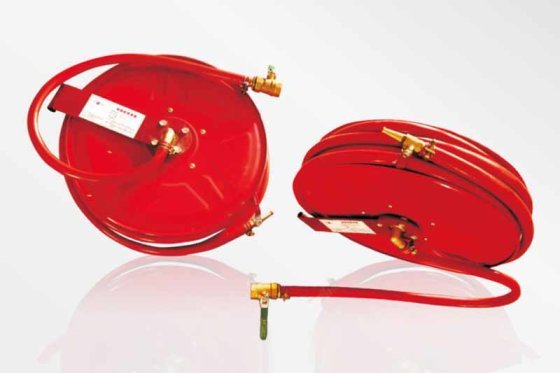
  • Fire hose and nozzles — 25 mm to 65 mm lines, delivered from a hydrant, standpipe or hose reel. Couplings are covered in our hose interface and water separator guide.
  • Fire hydrants and standpipes — the points where the fire service or building occupants collect water.
  • Fire blankets — the correct first response for a pan fire in a kitchen.
  • Monitors and mobile foam units — large-flow appliances used at industrial sites.

3. Detection, alarm and emergency lighting

Equipment only works if people know about the fire and can still see their way out.

  • Smoke detectors, heat detectors and linear heat cable
  • Manual call points, sounders and visual alarms
  • Fire alarm control panels, repeaters and remote signalling
  • Emergency lighting, illuminated exit signs and escape-route signage

4. Water supply equipment

The pipe, pump and valve train behind the systems above:

  • Fire pumps (diesel, electric or jockey), pressure tanks and suction tanks
  • Pipework, grooved and threaded fittings, valves, check valves and flow switches
  • Water storage, break tanks and backflow prevention

Material selection for these lines is covered in common materials of fire water systems.

5. Personal protective equipment

Used by trained responders and by in-house fire teams rather than by the general public: structural and forest-fire helmets, turnout coats and trousers, gloves, boots, self-contained breathing apparatus (SCBA) and, for industrial sites, chemical splash suits.

Which equipment where?

OccupancyFixed systemPortable / first response
Office / hotel / residentialWet-pipe sprinklersWater or ABC extinguishers, hose reels
Warehouse / logisticsESFR or large-drop sprinklers, in-rackTrolley extinguishers, hydrants
Fuel depot / hangarFoam and foam-water delugeFoam extinguishers, monitors
Data centre / archiveClean agent or water mistCO2 extinguishers
Commercial kitchenWet chemical hood systemWet chemical (Class F/K) extinguisher, blanket
High-rise buildingSprinklers + standpipeHose cabinets, extinguishers, extinguisher signage

Getting the package right

A compliant package is normally defined by the local fire code together with a design standard such as NFPA 13, NFPA 14 or EN 12845, plus the equipment-specific standards for portables. Buyers should expect listing and approval documentation — UL Listed, FM Approved or equivalent — for every component that carries water, because that documentation is what the authority having jurisdiction and the insurer will ask for.

Need a specification or quotation?

Send us your project requirements — our engineers will respond within one business day.