
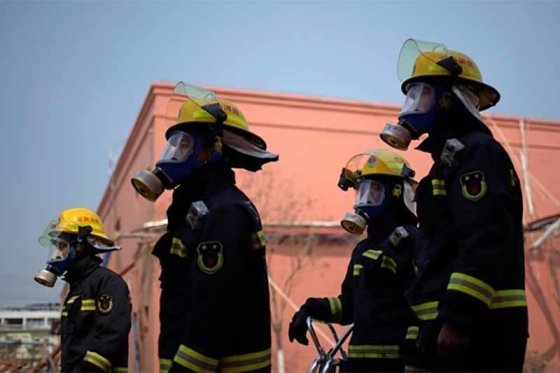
26 firefighters die battling China forest fire
Read article →
On 30 April 2009 the Minister of Public Security signed Orders No. 106, No. 107 and No. 108, publishing three supporting regulations for the newly revised Fire Protection Law of the People's Republic of China («消防法»). All three took effect on 1 May 2009, the same day as the revised Law.
| Order | Regulation | Subject |
|---|---|---|
| MPS Order No. 106 | Construction Project Fire Supervision and Management Provisions | Fire design review, completion acceptance and record-and-spot-check for construction projects |
| MPS Order No. 107 | Fire Supervision and Inspection Provisions | Scope, procedure and content of fire supervision inspections |
| MPS Order No. 108 | Fire Accident Investigation Provisions | Jurisdiction, procedure, evidence, loss statistics and determination of fire accidents |
The 2008 revision of the Fire Protection Law — effective 1 May 2009 — reduced the range of projects requiring fire design review and acceptance to large, densely occupied buildings and special construction projects, and moved everything else to a filing and spot-check regime. It also increased penalty ranges and added administrative enforcement measures, and it redefined what a fire investigation is for.
That last change is the one that matters most to investigators: the statutory task moved from “investigate and determine the cause, verify the loss and establish responsibility” to simply “investigate the cause of the fire and compile statistics of the loss”.
The Provisions were amended by MPS Order No. 121, adopted on 6 July 2012 and effective 1 November 2012. The amendment clarified the three-tier jurisdiction thresholds, required the determination to be served within seven days of issue (with a 20-day public notice procedure where service is impossible), set out the required contents of a technical investigation report, and tidied up the reconsideration and re-investigation procedure.
Because the determination now focuses on cause and loss statistics rather than on apportioning responsibility, the technical evidence carries the weight. In practice that means the paper trail matters:
Buyers specifying fire equipment should therefore treat approval documentation as part of the deliverable, not as an optional extra — see the certificates held by PROTECTOR SAFETY for an example of the documents that are normally requested.
Send us your project requirements — our engineers will respond within one business day.