How to use common fire extinguishers
Read article →
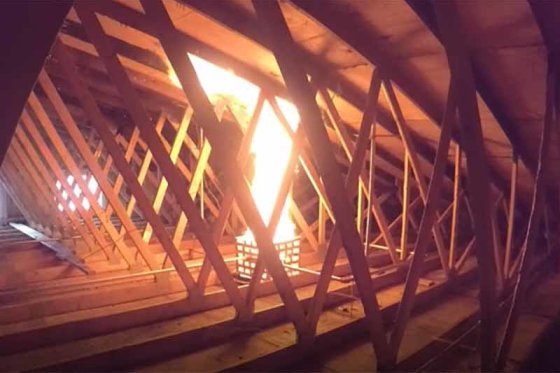
Every fire is extinguished by one of four mechanisms. Understanding them turns a confusing situation into a short, simple decision — and knowing when not to fight a fire is at least as important as knowing how.
| Fire | Never | Correct first action |
|---|---|---|
| Pan of cooking oil | Never water — it flashes instantly and spreads the fire over the whole kitchen | Turn off the heat. Slide a lid or a fire blanket across the pan and leave it for at least 15 minutes. Use a Class F/K wet chemical extinguisher if one is at hand. |
| Live electrical equipment | Never water while the power is on | Switch off at the breaker or pull the plug. Then use CO2 or dry powder. If the wiring itself smells of burning, get out and call the fire service. |
| Gas leak or gas flame | Never strike a match, switch a light, or use a phone near the leak; never try to put out a gas flame while gas is still flowing | Shut the supply valve if you can reach it safely. Open windows. Leave the building and call for help from outside. |
| Ordinary solids (sofa, curtains, paper bin) | Never open a window or a door to “let the smoke out” — the draught feeds the fire | Water or an ABC extinguisher only while the fire is still small and you have a clear way out behind you. |
Fight a fire only if all four of these are true: the fire is small and not spreading, the room is not filling with smoke, you have a clear escape route behind you, and you have the right extinguisher. If any one of them is not true, close the door, get everyone out, and call the fire service.
Send us your project requirements — our engineers will respond within one business day.